
The market for used smartphones keeps growing despite price pressure
The secondary market for used and refurbished smartphones is showing a clear trend: growth is consistently outpacing that of new devices. Recent market analyses confirm that demand for pre-owned hardware remains strong, driven by price pressure in the primary market and shifting purchasing strategies among both consumers and businesses.

The secondary market for used and refurbished smartphones is showing a clear trend: growth is consistently outpacing that of new devices. Recent market analyses confirm that demand for pre-owned hardware remains strong, driven by price pressure in the primary market and shifting purchasing strategies among both consumers and businesses.
What is happening in the market
In the third quarter of 2025, the average selling price of a used device rose to approximately €333, a year-on-year increase of around 3%. That is notable, given that used devices are typically associated with falling prices. The increase is linked to higher launch prices for new models and stronger trade-in values for existing devices. Market data shows that trade-in prices were on average nearly 10% higher than a year earlier, suggesting that the secondary market is absorbing part of the cost pressure from the new device segment. (Source: Secondary Market News, January 2026, based on IDC data)
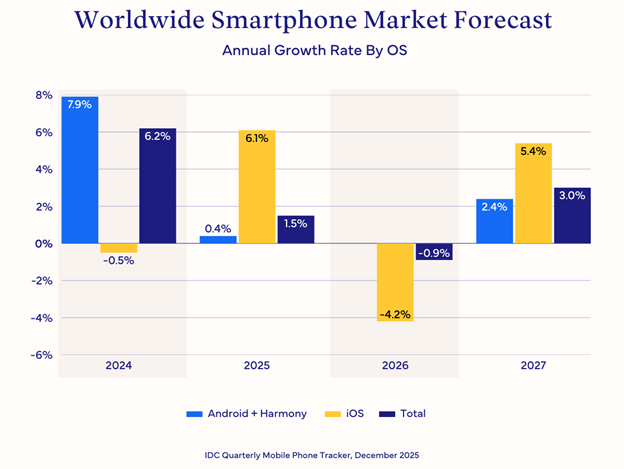
Research firm IDC confirms the broader trend: the global market for used and refurbished smartphones is set to grow by 3.2% in 2025, compared to just 1% for new devices. Growing demand for affordable, quality hardware is reshaping purchasing behaviour across both consumer and business segments. (Source: IDC Blog, August 2025)
Why is the secondary market growing faster than new devices
Two factors are driving this dynamic.
The first is price inflation in the new device segment. Higher production and component costs, partly driven by more expensive memory chips, have pushed the average selling price of new smartphones up by around 6% or more. Buyers are becoming more selective about the value they receive for their investment, which strengthens the appeal of used premium devices with high specifications.
The second is the strategic role of trade-in programmes. Major brands such as Apple and Samsung are accelerating upgrade cycles through aggressive trade-in offers and flexible financing options. These programmes increase the supply of recent, high-quality devices entering the secondary market while reinforcing the circular character of the supply chain.
What does this mean for refurbishers and resellers
While demand is clearly rising, analysts point to growing supply pressure, particularly for recent premium models. A tighter supply in this segment could push purchase prices higher and compress margins, especially when stock is not available in a timely and controlled manner. For refurbishers and distributors, this makes smart procurement, grading, and refurbishment strategies essential to keeping volumes and profitability in balance.
Implications for circularity
These developments make clear that the market for used smartphones is no longer a niche, but a structural pillar of global mobile distribution. Through longer device lifecycles, more transparent and consistently applied grading standards, and stronger trade-in values, the secondary market contributes not only to affordability but also significantly to sustainability. Pre-owned smartphones are increasingly a genuine alternative, rather than a fallback option driven by budget constraints.
Want to know how Brainscape gives your IT assets a responsible second life? Get in touch or explore our services.


